Christine Taylor
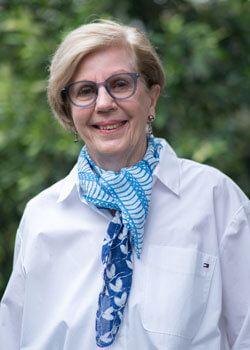
As an imaginative child, Christine Taylor hoarded her grandmother’s tales of both achievement and tragedy as she ate warm scones and cakes in Ivanhoe on Sunday afternoons. Years later, whilst researching the integration of her German ancestors into the flourishing colony of Victoria, the story of a lead-lined coffin and the inheritance of a lyrebird brooch kindled the plot and themes of this historical novel. Christine attended Monash University and completed a Bachelor of Arts in history and literature, and later, while caring for her toddlers, a Bachelor of Education in psychology. During periods living in Germany, she delved into the background of her immigrant ancestors. After teaching English for twenty-one years at McKinnon Secondary College in Melbourne, including a period as head of English, she now enjoys writing fiction. She is grateful to the Lyceum Writers’ group for their encouragement and to the following Victorian libraries for their assistance with archival materials: Beechworth Library, PMI Victoria History Library, Chiltern Atheneum Trust Museum and the State Library of Victoria. This is Christine’s first published novel.
from Chapter 1
If only, Mathilda thought, the pastor would focus his attention where his finicky interference would do some good. At eighteen, she was old enough to go for an early morning walk without answering to her old German teacher. But his current role as spiritual leader in the predominantly Lutheran township made Pastor Schober a powerful figure in the community. She would have to sit under his scrutiny and listen to his sermons this coming Sunday and every Sunday for as long as she lived in her parents’ home.
Mathilda turned into Main Street. She was opposite the bank with its fine façade, its architraves and columns, the town’s newest and finest building. Sensing movement behind the curtains in the residence above the bank, and, just in case it was William Knight who watched, Mathilda gave her hips a tiny swing and felt the accompanying swish of the muslin around her ankles. A pity, yes, a great pity that the handsome bank manager was married, and for him that he was married to Frau Purse Lips, as Else called Mrs. Knight. After three years in the town, her first name was still unknown. Of course, she and her husband attended the Church of England.
Then Mathilda saw Dieter Muller viewing her progress along the edge of the path. The grocer’s son was unloading the dray. She hoped he didn’t think the twitch of her skirt was intended for him to approve of her ankles.
‘Morgen, Tilly.’
‘Morning, Dieter.’ Her voice was curt so that her lack of interest in him would be quite clear. She saw a slight puzzled frown on his face and softened her tone. ‘I’ll be in later.’
Mathilda and Dieter had gone to school together and never made the transition to adult forms of address.
For the thousandth time this year, Mathilda wished that she were less aware of every man she met, torn between wanting each to desire her and fearing that no one ever would, or only those like Dieter whom she would never consider for a husband. No, marriage to the grocer’s son would not be the escape from the dreary round of daily chores that governed life in the Neumann household, the life of continuous physical labour that bound her mother’s existence, the pattern that Mathilda had no intention of following.
-

The Lyrebird Brooch, an historical romance
Rp168,127.00Select options This product has multiple variants. The options may be chosen on the product page Compare
The Lyrebird Brooch, an historical romance
Rp168,127.00In this Australian historical romance, young Mathilda, the daughter of German migrants, wants to escape the stifling paternal structure of hard work and obedience that controls her family life in a Lutheran fruit-growing community near Melbourne in the late 1880s. While jeweller Wilhelm Lund provides an avenue to a new life for them in marriage, good fortune still remains out of reach for the young couple in Beechworth, Victoria.
Select options This product has multiple variants. The options may be chosen on the product page Compare